


Recovery Is More Than Relief: Why Supporting the Body Matters

Pain is often what gets our attention.
It’s what interrupts sleep, limits movement, and reminds us that something isn’t right. But over time, I’ve learned that pain — whether physical or emotional — is rarely the full story.
More often, pain is a signal. And behind that signal is a body asking for support, not pressure.
When pain becomes layered
Pain doesn’t only live in muscles, joints, or tissues.
It can live in stress. In grief. In emotional experiences that the body hasn’t yet had space to release.
When the body stays in a heightened state — physically or emotionally — inflammation often becomes the common thread. And when inflammation lingers, recovery slows.
This is why people can be doing “all the right things” and still feel stuck.
Healing requires the right conditions
The body is designed to heal. But it doesn’t do that well when it’s constantly bracing, inflamed, or overwhelmed.
True recovery happens when the body feels supported enough to:
Regulate the nervous system
Improve circulation and cellular repair
Reduce ongoing inflammatory load
Shift out of survival mode
This is the philosophy behind CELLebrate Light.
Not forcing change.
Not pushing harder.
But creating the conditions where healing can occur more naturally.
Why red light therapy fits this approach
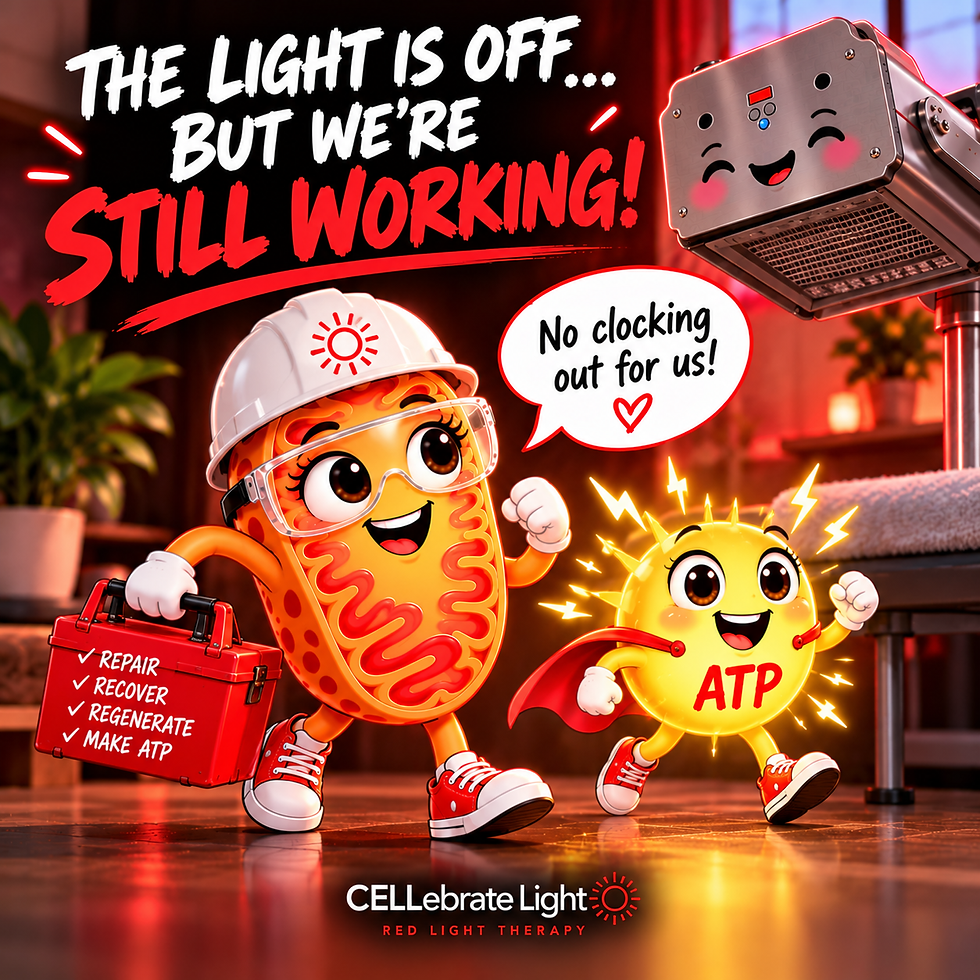
Red light therapy works at a cellular level, supporting the body’s natural repair processes. By helping reduce inflammation and support circulation and mitochondrial function, it becomes a powerful complement to hands-on care and other wellness practices.
What makes this especially valuable is that it supports recovery between appointments — where so much healing actually happens.
For many people, that’s the missing piece.
Supporting the whole person
At CELLebrate Light, recovery isn’t just about symptom relief. It’s about honoring the full experience of being human — body, nervous system, and emotional load included.
When the body feels safer, calmer, and more supported, healing often becomes steadier and more sustainable.
That’s not just better care.
It’s a better way forward.



Comments